

Blog
Can You Charge LiFePO4 With a Normal Charger? The 4.2 V vs 3.65 V Answer

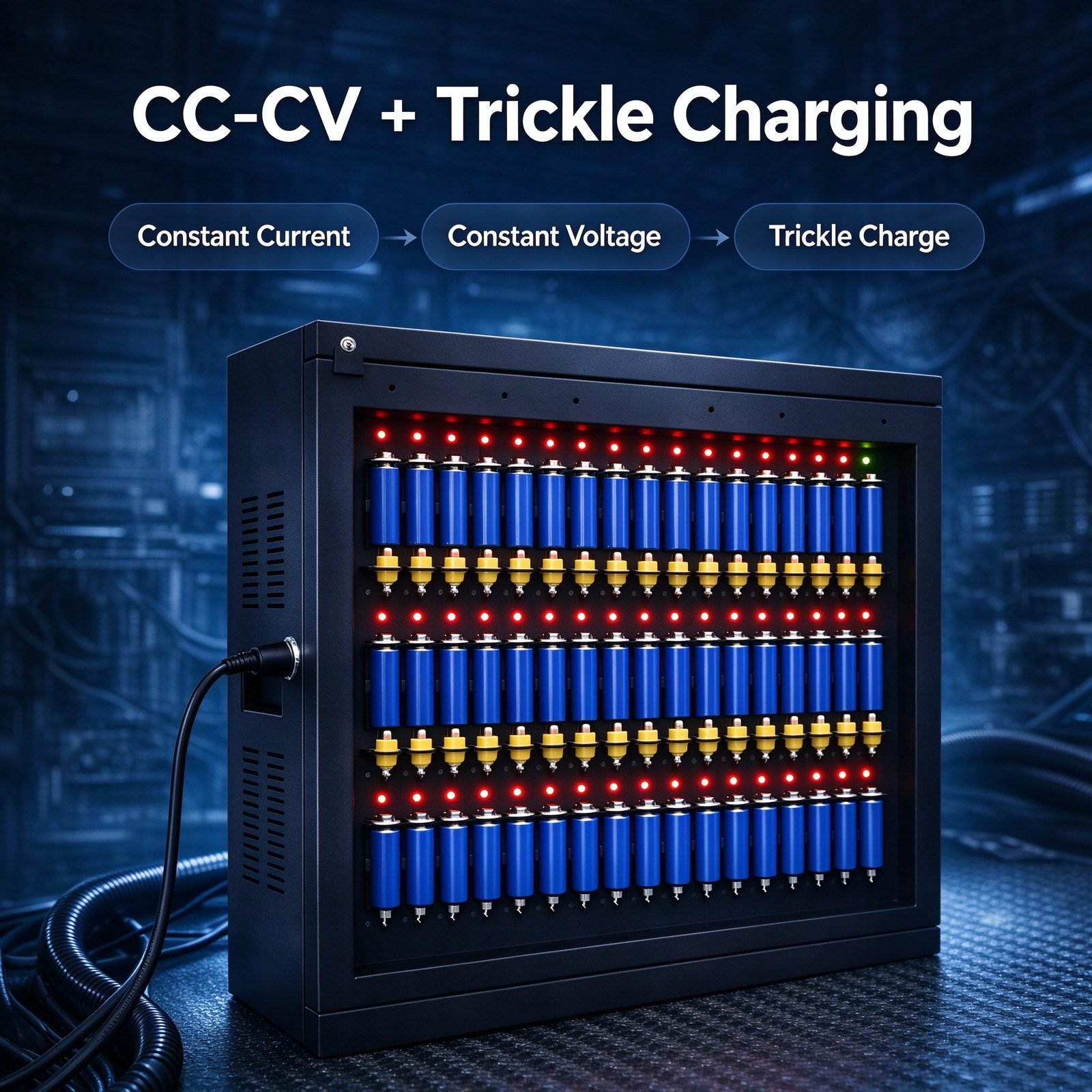
Standard models charge 3.6/3.7 V Li-ion cylindrical cells (4.2 V cut-off) and 1.2 V Ni-MH/Ni-Cd. LiFePO4 (3.2 V / 3.65 V cut-off), LiPo pouch cells and other chemistries are available as custom-built versions — tell us your cell model and we configure the charging profile.
The answer on this page is about cell-level charging of bare cells, not pack-level charging. 48-bay = 48 charging positions, not 48 volt; 168-position = 168 charging positions.
Can You Charge LiFePO4 With a Normal Charger?
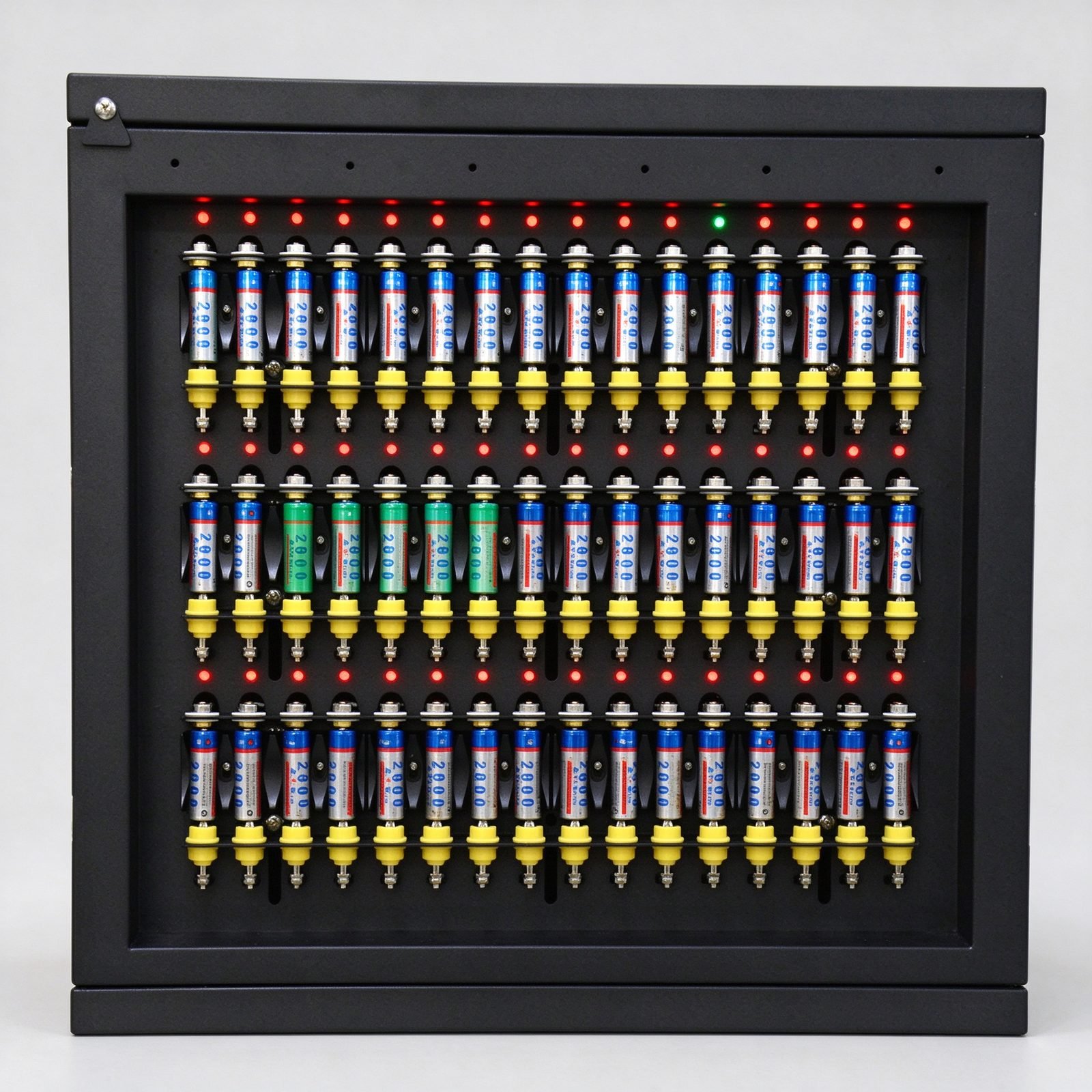
The short answer
> No — not with a standard 4.2 V lithium-ion charger. LiFePO4 cells need a 3.65 V cut-off, so they run on a custom-built cabinet.
“`html
“`
Standard 4.2 V is the cut-off for 3.6/3.7 V Li-ion cylindrical cells; 3.65 V is the custom cut-off for 3.2 V LiFePO4 cells, and the two are configured on different machines. A request for a LiFePO4 cabinet is therefore a request for a custom build, not for the standard 4.2 V cabinet. 48-bay = 48 charging positions, not 48 volt.
What “normal charger” usually means here
In English search results, a “normal charger” usually means either a 12 V / 24 V RV or lead-acid pack charger, or a common 4.2 V lithium-ion cell charger. Neither is the answer for LiFePO4. On this page, the phrase means one thing: the standard 4.2 V Li-ion profile. That profile belongs to 3.6/3.7 V Li-ion cylindrical cells; LiFePO4 at 3.2 V is charged to 3.65 V on a custom profile. 48-bay = 48 charging positions, not 48 volt.
Why 4.2 V and 3.65 V Are Not Interchangeable
4.2 V cut-off for 3.6/3.7 V Li-ion cells
The lithium ion battery charging voltage 4.2v used by standard machines is a 4.2 V ± 0.05 V cut-off, with a 100 mA cut-off current and a charge current of 800–1050 mA. It applies to 3.6/3.7 V Li-ion cylindrical cells such as 18650, 21700 and 26650. Those cells reach full charge at that cut-off, and the standard cabinet is built around that profile. 48-bay = 48 charging positions, not 48 volt.
3.65 V cut-off for 3.2 V LiFePO4 cells
LiFePO4 — including 32700, 32650 and 26650 LFP cells — is configured to a 3.65 V cut-off. Wording such as lifepo4 charging voltage 3.65v and 3.65v lifepo4 charging voltage describes the same custom cut-off. Using the 4.2 V profile on a 3.2 V LFP cell applies a higher cut-off voltage to a chemistry that must stop at 3.65 V, which is why the two profiles are not interchangeable. The standard 4.2 V cut-off is not applicable to LiFePO4. 48-bay = 48 charging positions, not 48 volt.
The contrast is the whole answer: 4.2 V ± 0.05 V for standard 3.6/3.7 V Li-ion cylindrical cells, 3.65 V for custom LiFePO4, and a separate 1.2 V configuration for Ni-MH / Ni-Cd cells. Each chemistry keeps its own cut-off. 168-position = 168 charging positions, not a voltage.
Why “adjustable” does not mean “universal”
An adjustable voltage battery charger means the voltage step can be configured for an order; it does not mean one cabinet covers every chemistry. Every chemistry still needs its own defined charging curve. A custom build is configured around a named cell model — the cut-off is set from the chemistry, not chosen freely on a dial. 48-bay = 48 charging positions, not 48 volt.
Which Searches This Page Should Not Serve
12 V and 24 V battery pack searches
Charging 12 V and 24 V battery packs for recreational vehicles or solar storage, including high-current 50 A pack systems, is a different product from cell-level LiFePO4 charging. This series charges bare cells, not assembled packs. If the subject is a 12 V or 24 V pack, this page is not the right answer: cell-level, not pack-level. 48-bay = 48 charging positions, not 48 volt.
Phone and device charging searches
Multi-device charging-station intents — charging phones, handhelds or finished equipment — are unrelated to bare LiFePO4 cells. Those words are kept out of this page’s answers. The cells here are loaded into individual positions of a cabinet. 168-position = 168 charging positions, not a voltage.
Getting a LiFePO4 Cabinet Built
What we need from you
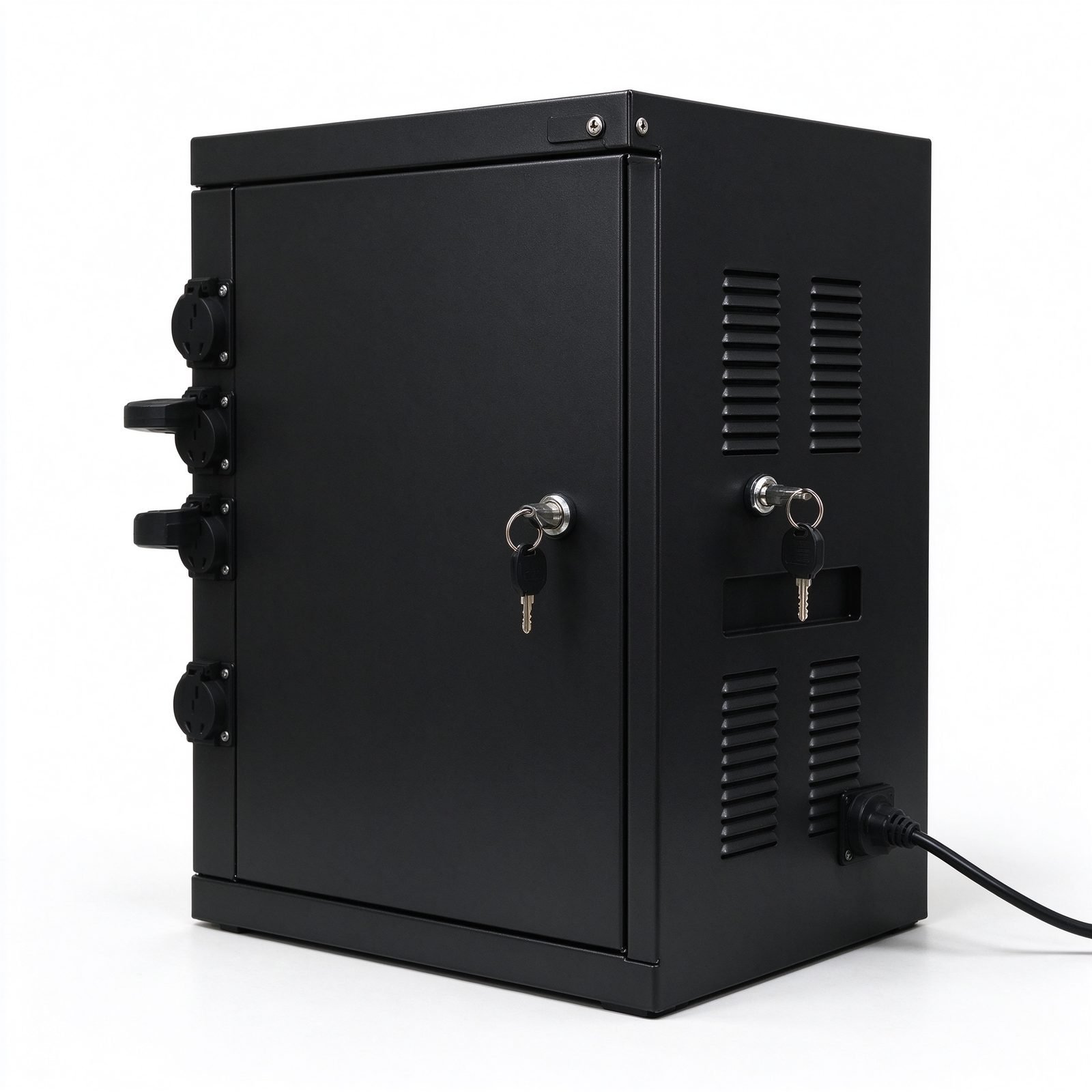
A custom RFQ needs five items: the cell model and chemistry; the nominal voltage and the cut-off voltage; the position count; the clamp, plug and structural requirements; and the certification and documentation requirements. Fix the chemistry and cut-off first, then the position count. 48-bay = 48 charging positions, not 48 volt; 168-position = 168 charging positions.
What the standard 4.2 V cabinet can and cannot do
Standard models charge 3.6/3.7 V Li-ion cylindrical cells (4.2 V cut-off) and 1.2 V Ni-MH/Ni-Cd. LiFePO4 (3.2 V / 3.65 V cut-off), LiPo pouch cells and other chemistries are available as custom-built versions — tell us your cell model and we configure the charging profile.
The standard 4.2 V cabinet covers 3.6/3.7 V Li-ion cylindrical cells only. A single-cell 3.7 V polymer / pouch cell and a 3.2 V LiFePO4 cell both go through the custom line; neither is standard coverage. For the cell-level product, see LFP cells charged at 3.65 V; for the RFQ route, see custom charging profile for LiFePO4. 48-bay = 48 charging positions, not 48 volt.
Technical Appendix: Voltage Reference
| Field | 3.6/3.7 V Li-ion cylindrical (standard CMX48) | LiFePO4 / LFP (custom) | Ni-MH / Ni-Cd (standard CMX168) |
|---|---|---|---|
| Chemistry and nominal voltage | 3.6 / 3.7 V Li-ion cylindrical | LiFePO4, 3.2 V nominal | 1.2 V Ni-MH / Ni-Cd |
| Chargeable cell formats | 18650 / 21700 / 26650 / 14500 / 18350 / 16340 / 20700 / 22650 / 26800 | LFP cells including 32700 / 32650 / 26650 LFP | AA, AAA and similar 1.2 V cylindrical cells |
| Charge cut-off voltage | 4.2 V ± 0.05 V standard | 3.65 V custom; standard 4.2 V not applicable | 1.2 V nickel configuration |
| Charge and cut-off current | 800–1050 mA; 100 mA cut-off | Set for the LFP cell model in the RFQ, confirmed per cell spec | < 500 mA |
| Charge method, termination, protection and indication | CC/CV; overcharge protection; automatic charge termination; LED status change at end of charge | CC/CV; configured to the cell model | CC/CV; per nickel configuration |
| Positions and smart modules | 48 positions: 12 modules × 4 positions | 48-bay / 168-position custom layout | 168 positions: 42 modules / 6 columns × 28 |
| Input power | 90–220 V / 50 Hz | 90–220 V / 50 Hz; plug configurable on request | 110 / 220 V · 50 Hz |
| Certifications | CE / FCC / RoHS | CE / FCC / RoHS | CE / FCC / RoHS |
| Per-position status, protections, onboard features and configuration route | One status LED per position; reverse polarity protection; external air switch; power-on self-test; CMX48 adjustable negative plate height; standard off-the-shelf build | One status LED per position; reverse polarity protection; external air switch; power-on self-test; clamp holder or adjustable negative plate built to order | One status LED per position; reverse polarity protection; external air switch; power-on self-test; standard off-the-shelf build |
Table note: 48-bay = 48 charging positions, not 48 volt; 168-position = 168 charging positions. CC/CV, charge termination, protection and indicator behaviour appear in this appendix only — they are baseline charging characteristics, not reasons to buy. For the standard cylindrical size list, see the cylindrical cell size compatibility chart. No fire-safety or safety-cabinet certification is claimed; the published scope is CE, FCC and RoHS only. 48-bay = 48 charging positions, not 48 volt.
Related Reading and Next Step
For the wider explanation of why one cabinet can charge many cells at once, see background reading on high-count charging; for the terminology behind bay, slot and position, see bay and position terms in spec sheets. 48-bay = 48 charging positions, not 48 volt.
The LFP product line
Cell-level LiFePO4 cabinets are the custom line described above, built around a 3.65 V cut-off. 168-position = 168 charging positions, not a voltage.
The custom RFQ route
A custom request starts with the cell model and the cut-off voltage. The RFQ fields are listed in Getting a LiFePO4 Cabinet Built. 48-bay = 48 charging positions, not 48 volt.
The standard Li-ion cabinet
If what you actually need is the standard 4.2 V Li-ion machine, see the standard 3.6/3.7 V Li-ion charging cabinet product page. Standard models charge 3.6/3.7 V Li-ion cylindrical cells to a 4.2 V cut-off and 1.2 V Ni-MH/Ni-Cd cells; LiFePO4 at 3.2 V uses a 3.65 V custom cut-off instead. 48-bay = 48 charging positions, not 48 volt.
Next step: confirm your cell model and cut-off voltage first, then decide between the standard 4.2 V Li-ion cabinet and a 3.65 V LiFePO4 custom build.